

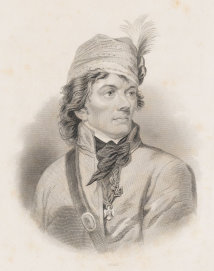
About Tadeusz Kosciuszko
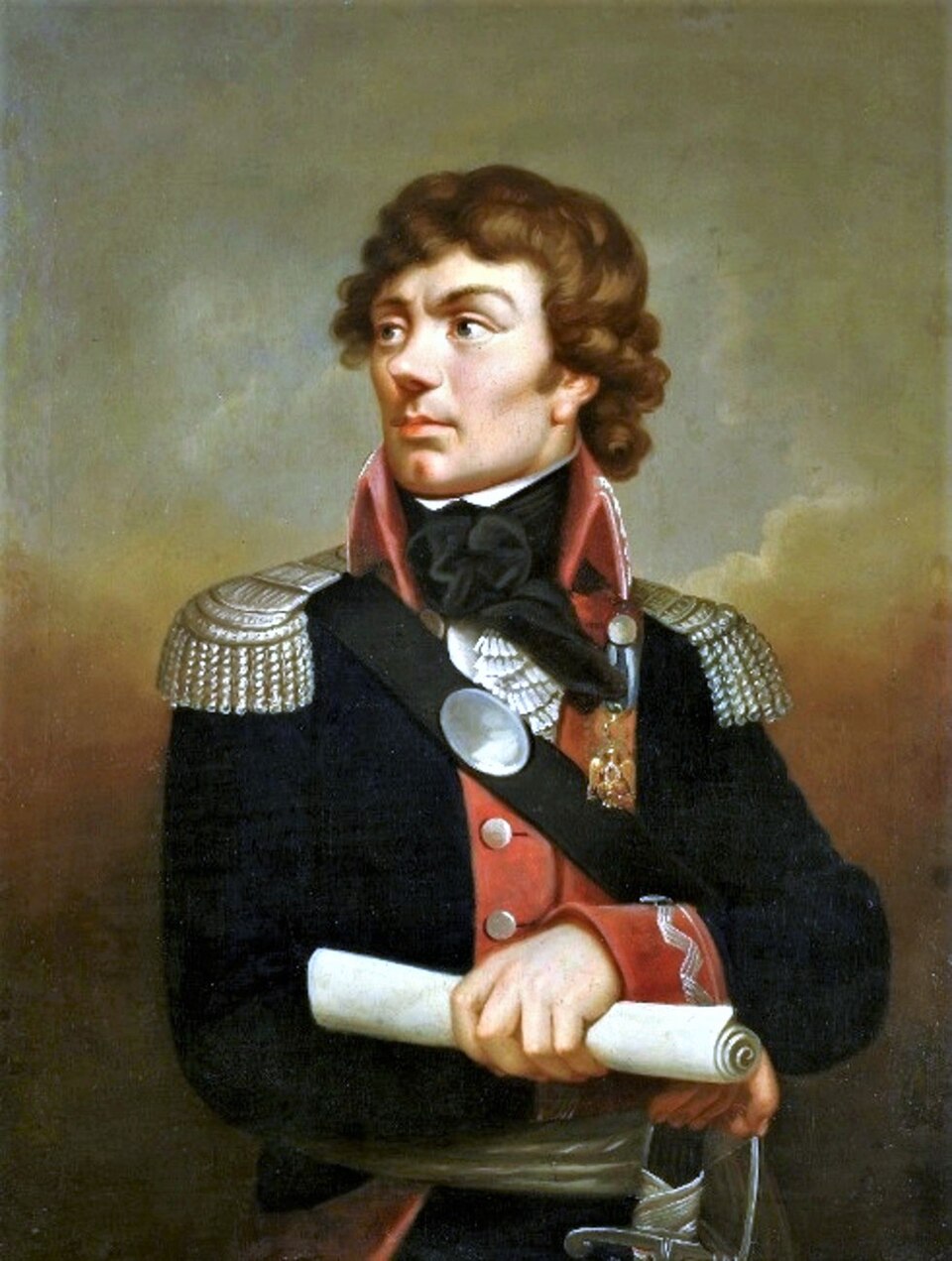
View Larger
Tadeusz Kosciuszko was born February 4, 1746 in Mereczowszczyzna, Poland [now in Belarus] and died October 15, 1817, Solothurn, Switzerland) was a Polish army officer and statesman who gained fame both for his role in the American Revolution and for his leadership of a national insurrection in his homeland.
in 1776 he went to America, where he joined the colonial forces fighting for independence from the British. That August he was transferred to the Pennsylvania Committee of Defense in Philadelphia, where he took part in planning fortifications to defend the residence of the Continental Congress against the British. For this work he was given the rank of engineer colonel. In spring 1777, he was assigned to the army of General Horatio Gates at Fort Ticonderoga, in northern New York. Beginning in July Kosciuszko became active in Gates’s army, closing by fortifications all roads along the Hudson River and thus contributing to the capitulation of the British army under General John Burgoyne at Saratoga on October 17. He spent the next two years fortifying West Point, New York, where in March 1780 he was appointed chief of the engineering corps. That summer, serving under General Nathanael Greene in North Carolina, he twice rescued the army from enemy advances by directing the crossing of the Yadkin and Dan rivers. In the spring of 1781 in South Carolina, Kosciuszko conducted the Battle of Ninety-Six and then a lengthy blockade of Charleston. At the end of the war he was given U.S. citizenship and was made a brigadier general in the U.S. Army.
In 1784 Kosciuszko returned to Poland. Because of his association with the Czartoryski family, then in opposition to the king, he could not secure an appointment in the Polish army. For five years he lived in poverty on a small country estate, in debt, moreover, because of his exceptional deed of freeing his serfs from part of their villein service. With the advent of liberal reforms in Poland, in 1789 he returned to military service. Under the protection of his former love, Ludwika, now the wife of Prince Lubomirski, and with the support of local nobility, on October 12 he was granted the rank of general major. At that time the 44-year-old general fell in love with an 18-year-old girl of noble birth, but again he was unable to win the father’s permission for marriage.
Despite a crippling illness, Kosciuszko returned to the United States. On August 18, 1797, he arrived in Philadelphia, greeted enthusiastically by the people but held in suspicion by the incumbent Federalists. In the United States he led an active life in social circles and entered into a long-lasting friendship with Thomas Jefferson, who was then vice president; but, after receiving news of fresh possibilities to promote Poland’s cause in France, he secretly left the United States on May 5, 1798.
Kosciuszko died in 181 and his remains were carried to Kraków and were buried in 1819 among the kings’ tombs in the cathedral. The people, reviving an ancient custom, raised a huge mound to his memory near the city.
The Kosciuszko Bridge

View Larger
The Kosciuszko Bridge is one of New York City’s most essential pieces of infrastructure, the hyphen in the Brooklyn-Queens Expressway that connects the two boroughs over Newtown Creek, the 3.5 mile creek which empties into the East River.
The bridge, originally the Meeker Avenue Bridge, was renamed in 1940 to commemorate the bond between America and Poland and Kosciuszko's revolutionary spirit


